If people are confused about what to do about climate change in their everyday lives, they have every right to be.
Fossil fuel companies have for decades funded disinformation through a network of ‘think tanks’, and commentators, planting stories in the media. This was all helped by PR and Advertising agencies who know how to play with people’s emotions; to create fear, uncertainty and doubt.
Many have explored this issue more deeply than I ever can or will. Notably, Oreskes and Conway showed, in their book Merchants Of Doubt [1], how the same tactics used to promote smoking and deny its harms, were used by tobacco companies.
We might imagine we can now see through their tactics. I’m not so sure. I feel there is a tendency amongst some progressives to almost fall into the trap of amplifying the messages.
I am thinking of how some who claim that heat pumps are for the comfortably well off and it’s not fair to push them for those in energy poverty. The alternative – to stick with the comfort zone of insulating homes – came to be the default. This is not fair to anyone.
Before we get on to that, let’s start with the birth of ‘climate shaming’.
Climate Shaming 1.0: It’s your demand that’s the problem!
It is well established that fossil fuel companies like Exxon and their network decided to make you, the consumer, the problem [2].
The message:
It’s you driving your car and running your gas boiler. We are just meeting your demand, so don’t blame us.
Intended result:
Guilt, denial and inaction.
It is even alleged that BP and their communication agency Ogilvy cooked up the idea of ‘carbon footprint’ [3]. We could all then measure our level of guilt. No wonder people often resorted to tiny actions to salve that guilt, when they felt powerless to do more.
Yet, there is a counter argument that while this was and remains a key plank in the strategy to delay action, measuring things can be useful. What is needed is to shake off the guilt and find ways to act.
Climate Shaming 2.0: It’s all your fault!
Shaming has metastasised into everything we do that we can feel guilty about, where fossil fuels are often out of sight.
There are many voices at work here, but in the background, fossil fuel interests are keen to keep the heat on you, dear citizen, rather than them.
They will claim to be doing their bit, with greenwashing PR and advertising … now over to you people!
While they don’t control every part of this conversation we have amongst themselves, they have the wherewithal to influence it in a myriad of ways. The message we receive is, “don’t do this bad thing” (but we, fossil fuel interests, won’t help you):
Don’t fly to Europe (but we won’t divert fossil fuel investments into trains)
Don’t eat meat (but we’re happy to reinforce your guilt, when the Amazon burns; for cattle feed)
Don’t eat Ultra Processed Foods (but like this behemoth, we work hard to ensure law makers give our fossil fuel interests a free pass)
Feeling guilty? Feeling helpless?
(laughing emoji from fossil fuel boardrooms)
Recognising our agency
We are told by some progressive politicians and commentators that it’s all about system change, and that we should reject the idea that it is our fault. We can’t take an EV Bus if there is a bad bus service (and they are still run on diesel), we need to invest in rural public transport not just in the cities.
There is a lot of truth in this, but it isn’t quite that simple.
We are not separate from the system, and it is hardly ‘systems thinking’ to imagine such a separation. The system includes Government, business, civic society and the natural environment, interacting in numerous ways.
Citizen-consumers have a lot of identities (community members, consumers, voters, parents, volunteers, etc). These identities each have their own form of agency, which we can choose to use. We need the spirit of positive change in the choices we make:
To choose who to vote for.
To chose where we spend our money.
To choose where to go on holiday and how to get there (and if/how often to fly).
To modify our diet (reducing meat if not eliminating it).
To decide to buy quality clothing that is repairable (looking and feeling better).
To decide where we bank and where we invest through our pensions.
Even when an action one would like to take (like getting an EV) is not yet in reach, one can keep exploring options and set a goal for when it does come within reach.
Setting goals too is an achievement.
The shaming tactic of the fossil fuel interests is aimed at breaking our sense of agency. We have to organise and support each other and reclaim our agency, as individuals and as communities.
The Take The Jump initiative [4] espouses practical steps we can take, while recognising we also need system change.
Electrification of energy end-use is a key threat to fossil fuel interests
There are a range of solutions available now to make a serious dent in our carbon emissions. The most significant and relatively easy thing to achieve is to electrify our primary energy and energy consumption. These solutions are so brilliant they have become a threat to fossil fuel interests, notably:
Electric Vehicles (EVs) of all kinds will not only clean up our towns and cities but are so much more efficient than their fossil fuel alternatives. They require only a third of the energy of a petrol/ diesel car to run them.
Heat Pumps are so much more efficient than their fossil fuel alternatives. They require between a third and a fifth of the energy needed to run a gas boiler.
Both EVs and Heat Pumps are powered by electricity. When generated by solar and wind, it is both free and unlimited, because it is derived from the Sun (which deposits 10,000 times as much energy on Earth as humanity is ever likely to need).
There has been an incessant effort by the network of fossil fuel interests to plant stories and create memes aimed at trying to undermine this transition to clean, electrified energy use.
They know they will eventually lose, because the science of thermodynamics and economic reality mean it’s inevitable. Yet they will try to delay the transition for as long as possible. They can then extract as much fossil fuels as they can, and avoid ‘stranded assets’. Whereas, if they truly cared about climate change they would be working to leave it in the ground.
This essay is not the place to enumerate every myth and piece of disinformation that relentlessly circulates on social media about EVs and Heat Pumps. Carbon Brief have done the myth busting for you [5].
Climate Shaming 3.0: It’s ok for you woke well-to-do!
In order to counter this threat a new form of shaming emerged, particularly in relation to personal choice. I’m calling it Climate Shaming 3.0.
If one believed the framing so often evident in right-wing papers like the Mail and Telegraph titles, EVs and Heat Pumps are (paraphrasing)
… for the woke well-to-do – something they can afford but is not any good for most people …
If it was only these usual suspects one might try to shrug off this chatter.
Unfortunately, there has emerged an unholy alliance amongst those who would regard themselves as green progressives (in a non political sense), who are in a way doing exactly what the fossil fuel messaging is intended to promote.
We have politicians of all kinds who have been cowed by toxic reporting on heat pumps who – wanting to show they are addressing fuel poverty – will talk endlessly about the need to insulate homes. Yet they dare not use the words ‘heat pump’ for fear of being accused of elitism (even though a heat pump is a far more cost-effective route to decarbonising heating than deep retrofit [6]).
They must be laughing their heads off in the boardrooms of fossil fuel companies.
Is it really ‘climate justice’ to promote the poorly designed ECO (Energy Company Obligation) scheme that the NAO (National Audit Office) declared [7] has been a total failure? NAO found that external wall insulation, for example, has led to bad and often exceptionally bad outcomes 98% of the time. This has required very expensive re-work in many cases, compounding the injustice.
This is to be contrasted with the BUS (Boiler Upgrade Scheme) that – despite all the claims about a lack of skills in the sector – has helped to really pump prime the heat pump sector and can be regarded as a success.
Communities like Heat Geek are really shaking things up too, to lower installation costs and improve the quality of installations (to the level already practiced by many small businesses with great track records).
The unholy alliance extends to plumbers, retrofit organisations, council officers, architects and politicians who claim you cannot heat an old building without deep retrofit. A disproven and false claim, but repeated as many times as the story about British pilots seeing better in WWII thanks to eating carrots.
Some untruths live on through repetition.
The idea that we can insulate our way out of energy poverty, without also pushing at least as hard on rolling out heat pumps (individually or using shared heat networks) is an illusion, that would mean we’d be stuck with burning gas for much longer than necessary.
More laughter from those boardrooms.
Insulation, replacing windows and other fabric measures are important but you can easily blow so much money on these that you leave nothing in the pot for a heat pump [6].
Here is a diagram from Nesta that was based on one I originally produced and here I have added some further annotations (see [6] for Nesta version):
That is not climate justice, or fair on anyone.
It is not climate justice for those in energy poverty to have to pay for gas that will inevitably go through repeated market crises and cost spikes in its dying decades.
Climate justice is future proofing our electricity supply, the grid, our homes and our streets.
These will then be not only cleaner and more efficient but future proofed. As the late Professor Mackay observed, once you have electrified end use of energy, the electricity can come from anywhere: from your roof, from a community energy project, or from a wind farm in the north sea.
It’s time that those that claim to be progressives stopped falling for the tactics of fossil fuel interests, that time and again are slowing our transition to a clean energy future, and action on climate change.
It started with shaming people for their consumption. Let’s not fall for the new tactic of shaming those who actually care enough to adopt effective solutions.
References
[1] Merchants of Doubt: How a Handful of Scientists Obscured the Truth on Issues from Tobacco Smoke to Global Warming, Naomi Oreskes and Erik M. Conway, 2010, Bloomberg Press.
[2] Exxon Mobil’s Messaging Shifted Blame for Warming to Consumers, Maxine Joselow & E&E News, Scientific American, 15th May 2021.
All the talk of the ‘spark gap’ – the particularly high ratio of electricity unit prices to gas unit prices – might deter people from getting a heat pump, because they think it will mean they will pay more for their heating than they do currently, but this is false in the majority of situations where householders are end-of-lifeing their old gas boiler.
Let’s run the numbers.
Take a building that currently that consumes 30,000 kWh of gas for heating per year.
At a gas unit price of 6p/kWh that totals £1,800 per year (for the moment, ignoring standing charges for simplicity)
Let’s assume the old gas boiler is 75% efficient (in many cases with will be quite optimistic).
So, building actually needs 22,500 kWh of heat reaching radiators (0.75 x 30,000 = 22,500).
So the question is, can a heat pump be cheaper to run with its high relative performance that counteracts the ‘spark gap’? Let’s see …
Let’s assume a reasonable minimum achievable heat pump system SCOP of 3.5
So heat pump needs 6,429 kWh of electricity to produce 22,500 kWh of heat ((22,500 / 3.5) = 6,429)
At a electricity unit price of 22p/kWh that totals £1,414 per year
That is a saving of £386 on running costs
Health Warning: The difference is very sensitive to the ‘spark gap’ (ratio of electricity to gas unit prices), and crucially the SCOP.
Now, I am not saying there is not an issue with the ‘spark gap’. Adoption rates in Europe show that the smaller the spark gap, the high the adoption of heat pumps (see ‘Figure 2.4 Comparison between the heat pump market share, the number of heat pumps installed, and electricity and gas price ratio for countries in Europe in 2023’, Progress in reducing emissions – 2025 report to Parliament, 25 June 2025).
However, when people talk about the spark gap they seem to assume the context is ‘buy a new gas boiler or buy a heat pump’. Needless to say that is a higher bar but not an insurmountable one. Many people who are concerned about climate change and have an ageing gas boiler simply want to know that their heat bills will not rise.
Now back to standing charges. I rerun the numbers for different SCOPs and included standing charges (see NOTES for assumptions). The ‘breakeven’ SCOP is then close to 2.9, which frankly only an incompetent heat pump installer would fail to exceed.
And what is more, for any of these SCOPs the carbon saving is at least 4 tonnes of carbon dioxide equivalent per year. So both the planet and the bank balance can be happy with the choice.
So, let’s fix the spark gap, but stop banging on about it as though it is a reason not to press on with rolling out heat pumps.
(c) Richard W. Erskine, 2025
NOTES
Assumptions used in table: With heat demand of 22,500 kWh and old gas boiler with efficiency of 0.75 (75%), so gas bill showing 30,000 kWh primary energy used by gas boiler. Used standing charges of 28p and 59p per day for gas and electricity, and unit rates of 6p/kWh and 22p/kWh, respectively. The breakeven running costs SCOP in this case is 2.935. Also, a carbon intensity of gas of 184 gCO2/kWh and for UK electricity grid (for 2024) of 124 gCO2/kWh; so even at a SCOP of 2.5 you save 4.37 tonnes of CO2 a year.
I respect those wishing to protect nature who are worried about unrestrained infrastructure projects, but the ‘unrestrained’ bit was never part of the plan, and strawman arguments now abound, such as the claim we will be building solar farms on prime arable farmland.
An astonishing 30% of UK land is devoted to grazing, and raised solar arrays can co-exist with grazing, even providing shade during heatwaves. It may even pay back some of the carbon impact of those methane burping ruminants. Solar grazing (or agrivoltaics) is now a thing in some countries so why is it not supported by organisations like the CPRE in the UK?
I have concerns about the impact of progressive weakening of the Government’s new infrastructure policies that may continue the blocking or delaying of essential on-shore renewable energy projects.
In his seminal book over 15 years ago, Professor David Mackay wrote1:
If the British are good at one thing, it’s saying “no.”
No to this solar farm; no to that wind turbine on that hill; no to that wind farm off my coastline; etc.
This, despite the fact that the Government’s most recent public opinion survey2 shows 80% are in favour of renewables; although when it comes to on-shore wind and solar farms in one’s locality, this drops to 37% and 47%, respectively.
Is this because the public are not aware of the benefits of local energy production? Or because not enough of it is community owned? Is it that people do not understand the nature of the emergency we face and the imperative to act?
We’ve seen over the sequence of three heatwaves3 recently (heatwaves that have been made much more likely due to man-made global warming4) that our beloved commons around Stroud now look more like the Serengeti than our green and pleasant land. This will be the new norm by 2050 if we don’t urgently address our emissions.
At this stage in the climate emergency, climate inaction is tantamount to climate denial.
The Climate Change Committee has made it abundantly clear that we need to electrify most of our economy to get to net zero expeditiously and affordably5: This applies to both generation and consumption:
“In many key areas, the best way forward is now clear. Electrification and low-carbon electricity supply make up the largest share of emissions reductions in our pathway, 60% by 2040. Once the market has locked into a decarbonisation solution, it needs to be delivered. The roll-out rates required for the uptake of electric vehicles (EVs), heat pumps, and renewables are similar to those previously achieved for mass-market roll-outs of mobile phones, refrigerators, and internet connections.”
and really at a much lower costs than many have claimed:
“We estimate that the net costs of Net Zero will be around 0.2% of UK GDP per year on average in our pathway, with investment upfront leading to net savings during the Seventh Carbon Budget period. Much of this investment is expected to come from the private sector.”
Much has changed since David Mackay wrote his book. The costs of renewables has dropped, so they are now the cheapest form of energy (and onshore cheaper still).. Yet I believe another kind of “No” has developed in the dialogue around renewables infrastructure.
There has emerged a false dichotomy between green energy infrastructure and nature. The case often presented is that to protect nature we have to limit infrastructure to only those places which no one cares about, like brownfield sites, which of course would completely undermine any attempt to reach the levels of onshore wind and solar that are needed to supplement off shore development. Whereas there are many things harming nature which are much worse including farming systems, tidy gardens, and climate change itself.
Take the rewiring of our electricity grid that is needed for an electrified economy. The case is made for burying cables as opposed to pylons because it is assumed they are environmentally less harmful, and despite the enormous increase in capital costs (and hence delays) that would result. In fact, burying the quite different ultra expensive cables needed in wide trenches can have impacts on flora and fauna, such as harm to tree roots and subsoil ecology, that can exceed those arising from pylons.
Isn’t the honest truth that people simply don’t like their view being changed by the addition of renewables to the landscape and some use the nature card to avoid being labelled NIMBYs? I fear so.
Rodborough Common 19th Juky 2025 by Richard Erskine
Conversely, we can fail to act and our grandchildren will see a landscape changed forever by our inaction. The MetOffice’s most recent State of The Climate report6 states that under the intermediate pathway scenario (RCP4.5) “years 2022, 2023, and 2024 would likely be considered average by the 2050s and cool by around 2100”. Is that preferable to some wind turbines today offering local energy security and resilience, helping the local community do its part in decarbonising our economy?
The good news is that because of the enormous efficiencies of electrification and the end of burning fossil fuels, the primary energy required from renewables – about 800 TWh per year – would be about one third of the primary energy hitherto required from fossil fuels. Even if we almost double this – to allow for new demands like synthetic meats, AI, minerals recycling, etc – to about 1500 TWh, an Oxford University study7 shows wind and solar can power the UK. As Hannah Ritchie summarises the findings8:
“They think there is a large potential for offshore wind. This would be spread over 10% of the UK’s exclusive economic zone. Onshore wind could be used on 5% of British lands, and combined with farmland. 2% of British land would be used for solar PV, and could also be combined with farmland using a technique called ‘agrivoltaics’. Rooftop solar doesn’t add much – the output is quite small, even if 8% of British rooftops are covered. Definitely still a good option for individuals, but maybe not for the nation as a whole.”
For those that say let others do it, because we are special, don’t be surprised if everyone claims the same. It is analogous to a parent who says let other children take the vaccine (while their child benefits from community immunity so they can avoid the very small risk of side effects of inoculation). If everyone made that choice, everyone is at risk.
Have we, in short, become too selfish to take the steps to act with the urgency needed to actually take declarations of a climate emergency seriously; to go beyond laudable actions like recycling to really substantive endeavours?
We need to make the difficult decisions needed but work hard to take people with us, rather than stoke fears as some political parties choose to. The political debate has created some surprising bedfellows amongst those opposing onshore renewables projects.
I was excited to get my hands on Jean-Baptiste Fressoz’s latest book More and More and More – An All-Consuming History of Energy [1]. He offers up a very lively critique of the notion of historic energy transitions – from wood, to coal, to oil and gas.
His methodology aims to show how material flows are intimately linked to energy production in often surprising ways over time. For example we needed wood as pit props to mine coal, and in surprising quantities. Most of the book is devoted to examples of the symbiosis that has existed between the successive materials required to meet our energy needs. He mocks the idea of energy transitions with numerous well researched anecdotes, awash with surprising numbers. It is an entertaining read I would recommend to anyone.
However, I was expecting the book would close with some prescriptions that would show how the “amputation” the blurb called for could be achieved, but in the end he tells us he offers no solutions, or “green utopias”, as he discussed in an interview [2].
In the finale, he presents the newest energy transition – towards a world powered by renewables – as just the latest incarnation of a delusional concept, but largely abandons his methodology of using numbers to prove his case. I wonder why?
He does not deny the reality of a need to reduce carbon emissions, or the science of climate change, but it is clear he sees humanity’s insatiable appetite for energy as the central issue that must be addressed. He could have written a different book if that was his objective.
There are fundamental flaws in Fressoz’s scepticism of the renewables transition.
Solar abundance
The first of these is that the new source of energy that supplies our energy in a renewables future is our sun. Energy from the sun is a quite different category to that we extract from the ground.
The most pessimistic projection is that humanity, or what we may become, will have hundreds of millions of years left of usable energy from the sun [3]. No digging or extraction required. I’d call it functionally infinite on any meaningful timescale.
Not only that, but the sheer power of the sun’s energy is awesome, which we capture as wind, through photovoltaics, and the ambient energy harvested by heat pumps. As Frank Niele observed 20 years ago [4]:
“The planet’s global intercept of solar radiation amounts to roughly 170,000 TeraWatt [TW] ( 1 TW = 1000 GW). … [man’s] energy flow is about 14 TW, of which fossil fuels constitute approximately 80 percent. Future projects indicate a possible tripling of the total energy demand by 2050, would correspond to an anthropogenic energy flow of around 40 TW. Of course, based on Earth’s solar energy budget such a figure hardly catches the eye …”
It is clearly a category error to compare renewables with fossil fuels.
False equivalence
Ah, but what about the lithium and all those (scare story alert) “rare earths” needed to build the renewables infrastructure. This is the second flaw in the Fressoz thesis. The example of wood consumption for mining staying high even after the ‘transition’ to coal, is an example of an essential material relationship between the kilowatt-hours of energy produced and the kilograms of material consumed. This link does not exist with renewables to any meaningful degree.
It has nevertheless become a popular belief amongst those questioning the feasibility of renewables. For example, Justin Webb on BBC Radio 4 [5] posed this question:
“Is it also the case of us of us thinking whether we can find some other way of powering ourselves in the future … [we are] just going from taking one out of the ground – oil – into taking another thing or another set of things just isn’t the answer, isn’t the long-term answer for the planet.”
This is another category error that unfortunately Fressoz seems happy to go along with. The quantities of minerals required is minuscule compared with the huge tonnage of fossil fuels that has powered our carbon economy, as CarbonBrief illustrated as follows, as part of a debunking of 21 myths about Electric Vehicles [6]:
Credit: CarbonBrief
This false equivalence between minerals extraction and fossil fuels extraction is now widely shared by those who prefer memes to numbers.
A detailed published analysis of the demands for minerals required to build out renewables infrastructure by mid century shows we have enough to do this, without assuming high levels of recycling [7]:
“Our estimates of future power sector generation material requirements across a wide range of climate-energy scenarios highlight the need for greatly expanded production of certain commodities. However, we find that geological reserves should suffice to meet anticipated needs, and we also project climate impacts associated with the extraction and processing of these commodities to be marginal.”
Yet many commentators claim we are in danger of running out of ‘rare earths’ (which they conflate with minerals in general).
Beyond that, it is true that for many minerals it is cheaper to mine them rather than recycle them but Fressoz claims (p.218) “recycling will be difficult if not impossible”. There is no scientific basis for that claim. By 2050, one can expect that better design, improved technologies, economic incentives, and global coordination will become widely effective in tilting the balance to recycling rather than fresh extraction (and energy inputs to do this will not be an issue, as noted earlier).
And once you have built a wind farm it will continue to provide energy powered by the wind for a few decades (which is powered by the sun), without the need for material extraction or material inputs, and the faster this is done, the cheaper it gets, saving trillions of dollars [8].
A renewables circular economy is perfectly feasible, following the initial build out of the new infrastructure by mid century, with abundant energy from the sun powering the recycling needed to maintain and refresh that infrastructure.
Intermittency and grid stability
It is sad that Fressoz decides to play the it-doesn’t-always-shine card when he writes (p. 212):
“At the 2023 COP, the Chinese envoy explained that it was ‘unrealistic’ to completely eliminate fossil fuels which are used to maintain grid stability”.
… as though that settled the argument. They may have said this for UNFCCC (UN Framework Convention on Climate Change) negotiating reasons, but it is frankly pretty depressing that Fressoz shared this quote as though it reflected current informed opinion on power systems.
Firstly, even fossil fuelled generation in the early 20th Century needed flywheels to level out energy supply, and in so doing, maintain grid frequency. Such devices can live on in a renewables dominated grid. More likely is the emergence of ‘grid forming inverter’ technology that can replace inertial forms of frequency response such as flywheels and turbines.
Secondly, there are several other ways in which a grid that is 100% based on renewables can remain stable, including what is called ‘flexibility’ (including demand shifting), and distributed energy storage.
The UK is rolling out a lot of battery storage, and these have the benefit of being able to be both large and small to support the network at local, regional and national levels. Battery Energy Storage System (BESS) technology is already making an impact in the UK, Australia and elsewhere [9] demonstrating the resilience that can be achieved in a well designed and well managed grid:
“Recently, a major interconnector trip sent the UK’s grid frequency plummeting. At around 8:47am on a morning in early October [2024], the NSL [North Sea Link] interconnector linking the UK and Norway, suddenly and with no warning, halted … with immediate and potentially disastrous impact on the UK’s electricity grid … battery energy storage systems (BESS) answered the call. Across NESO’s network [National Systems Energy Operator], 1.5GW of BESS assets came online to inject power into the system, bringing frequency to strong levels within two minutes.”
Far from renewables infrastructure causing a blackout, it prevented it. Other countries can learn from this (side eye to Spain!).
A near 100% renewables grid is well within the reach of countries like Australia, and others are not far behind [10]
As the infrastructure scales up, additional storage will be added, to deal with rare extended periods of poor sunlight and low wind. The Royal Society has provided recommendations [11] on how to handle such extreme episodes.
The Primary Energy Fallacy & Electrification
While Fressoz does talk about the efficiency arising from new forms of production and consumption, he does not really chose to provide any numbers (which is in stark contrast to the slew of numbers he uses when talking about wood, coal, oil, etc.).
He then makes the point (p. 214):
“In any case, electricity production accounts for only 40 per cent of emissions, and 40 per cent of this electricity is already decarbonised thanks to renewables and nuclear power.”
He channels arguments that readers of Vaclav Smil will be familiar with. Telling us how hard it will be to decarbonise steel, fertiliser production, flying, etc.; no solutions, sorry.
Even S-curves (that show how old technology is replaced by new) are disallowed in Fressoz’s narrative, because they are too optimistic, apparently, even though there is empirical evidence for their existence [12].
Just a ‘too hard’ message.
What he fails to mention is that the energy losses from using fossil fuels are so large that in electrifying the economy, we will need only about one third of primary energy hitherto needed (using renewables and nuclear). So, in the UK, if we needed 2,400 TWh (Terawatthours) of primary energy from fossil fuels, in an electrified economy powered by renewables, we’d only need 800 TWh to do the same tasks.
The efficiencies come both from power production, but also from end use efficiencies, notably transportation and heating. By moving to electric vehicles (trains, buses, cars) and heat pumps, we require only one third of the energy that has hitherto been used (from extracted coal, oil and gas). This is massive and transformational, not some minor efficiency improvement that can be shrugged off, as Fressoz does,
Green production of steel, cement and fertiliser is possible and in some cases already underway, although currently more expensive. Progress is being made, while flying is more difficult to crack. Together these sectors account for about a quarter of global emissions. Yet, road transport and heating together also represent about quarter of global emissions [13], and are easy to decarbonise, so I guess don’t fit into the book’s narrative.
The surprise for many, who are effectively in thrall to the primary energy fallacy, is that we can raise up the development of those in need while not necessarily increasing the total energy footprint of humanity. We can do more and more, with less!
Who is deluded?
In his essay The Delusion of “No Energy Transition”: And How Renewables Can End Endless Energy Extraction, Nafeez M Ahmed offers an eloquent critique of Fressoz’s book [14].
A key observation Ahmed makes is that Fressoz’s use of aggregate numbers masks regional variations in a misleading way:
“Because he fails to acknowledge the implications of the fact that this growth is not uniform across the globe at all, but is concentrated in specific regions. The aggregate figures thus mask the real absolute declines in wood fuel use in some regions as compared to the rise in others. Which means that oil and wood fuel growth are not symbiotically entwined at all.”
Ahmed goes on to present the arguments about the different nature of the move to renewables, electrification of end-use and so on, in an eloquent and persuasive way. I strongly recommend it.
Fressoz is right to claim that many have been seduced by a simplistic story about past transitions. His book is very entertaining in puncturing these delusions, but he overplays his hand. Ahmed argues convincingly that Fressoz has failed to demonstrate that his methods and arguments apply to the current transition.
Fressoz’s attempt to conjure up a new wave of symbiosis fails because he misunderstands and misrepresents the fundamentally different nature of renewables.
Is there a case for degrowth?
Of course, we do live in a world of over consumption and massive disparities in wealth (and over consumption does not seem to be a guarantee of happiness).
The famous Oxfam paper on Extreme Carbon Inequality from 2015 [15] showed how the top 10% of the world (in terms of income) were responsible for 50% of emissions, and the bottom 50% were responsible for 10% of emissions. An obscene asymmetry. As Kate Raworth argues in Doughnut Economics, we need to lift up those in need, while reducing the overconsumption of some that threaten planetary boundaries.
Yet we do not help those in poor countries by getting them hooked on fossil fuels. Indeed, renewables offer the opportunity to avoid the path taken by the so called ‘developed world’, and go straight to community-based renewable energy. This can be done – at least initially – without necessarily needing to build out a sophisticated grid: solar, wind, storage and electrified transport, heating and cooking is a transformative combination in any situation. We can increase the energy footprint of the poorest (providing them with the development they need), while reducing their carbon footprint.
Yet many want to play the zero sum game. True, there is a carbon budget (to remain below some notional global target rise in mean surface temperature, we cannot burn more than a quantity of carbon; the budget). We should share it out this dwindling budget fairly, but honestly, will we?
The game is nullified if people simply stop burning the stuff! The sun’s energy is functionally infinite (in any meaningful timeframe), so why not reframe the challenge? How about the poorest not waiting for, or relying on, the ‘haves’ suddenly getting a conscience and meeting their latest COP (Conference Of the Parties) promises? Countries like Kenya are already taking the lead [16].
Energy Independence and Resilience within our grasp
There are of course multiple interlocking crises (climate, nature, migration, water, and more). They are hard enough to deal with without claiming that energy should join them.
The land use needed for our energy needs is small compared to what is needed for agriculture and nature, so again, renewable energy is not part of another fictitious zero sum game involving land use.
A paper from the Smith School in Oxford [17] has found that wind and solar power could significantly exceed Britain’s energy needs. They found that even if one almost doubled the standard estimates of the energy needs (to cater for new demands such as circular economy, AI and synthetic meat in 2050), there were no issues with the area of land (or sea) required:
Solar PV 4% of British Rooftop
Solar PV 1% of British Land*
Wind Onshore 2.5% of British Land
Wind Floating Offshore 4% of UK’s exclusive economic zone.
… and bearing in mind that 30% of land is currently used for grazing.
The scare stories about prime arable land being covered in a sea of solar panels is politically motivated nonsense.
I gave a talk Greening Our Energy: How Soon, on how to understand how the UK has made the remarkable transition from a fossil fuel dominated energy sector to our current increasingly decarbonised grid, and how the journey will look going forward (and in a way that is accessible to lay people) [18].
In a world of petrostates and wars involving petrostates, there has indeed been repeated energy crises, and they will get worse while we remain addicted to fossil fuels.
Transitioning to a green energy future is the way out. It is already under way, we have the solutions. We just need to scale them up, and ignore the shills and naysayers.
Let’s not say or imply that solving the many injustices in the world is a pre-condition to addressing the energy transition. This is the false dilemma that is often presented in one form or another, often from surprising quarters, including ostensibly green ones. It is a prescription for delay or inaction.
Achieving green energy independence and resilience might actually undermine the roots of many of those power structures that drive injustices, because energy underpins so much of what communities need: education, health, food, and more.
John Lennon seems to says it right in his song “Power to the people”.
A group of 6 ‘heat pump curious’ visitors, organised through our local climate group, cycled from Woodchester to Nailsworth to visit our heat pump and get their questions answered. My wife took some videos of me extemporising. It was a cold day (about 6C outside).
The house is over 200 years old, Grade 2 Listed, and with a floor area of about 250 square metres. Instead of having one large heat pump, Cotswold Energy Group, who installed the system 3 years ago, provided two smaller units. This had the benefit that for much of the year only one is running, as was the case on this visit (if, as one of the visitors pointed out, it had been -6C, then both would have been in operation).
Explaining the heat pump in plain English
So here is the first of the short videos – a plain English short talk (11 mins) explaining how a heat pump works and answering their questions.
You will notice that at one point I had to crouch down to see if one or both units was running – rather demonstrating the low level of noise they produce. At another point in the video, some of the visitors had to shuffle sideways as they were experiencing the cold air from the heat pump (which extracts heat from the air, as explained in the video). I also mention a figure of 20 litres of water a minute as the rate of flow through the radiators. This was illustrative only and not a fixed number, as it depends on a number of factors, and may have been more than that on this occasion.
Explaining why underfloor heating is not required, using a simple model
In this video (2 mins) I explained how radiators can deliver the same heat as underfloor heating, by using a simple paper model for explanation.
Everyone commented on how cosy the room was. We looked at a thermometer that showed it was at 21C. I then got someone to put their hand on the radiator and I asked if they thought it was on, and they weren’t sure. I used a thermometer gun to see how hot it was – its was only 30C. Then I got them to turn their hand palm upwards and found the temperature was 28C, and so of course the radiator didn’t feel “hot”. But, it doesn’t need to be 60C, or 70C, to heat the room, just greater than the target temperature (21C) and sufficiently higher than that to deliver the heat at the rate that balances the rate at which heat is lost from the wals etc.
The flow temperature was a bit higher than this (as this was the surface temperature of just one radiator), but it illustrates the point. ‘Low and slow’ heating works, and delivers greater comfort.
Explaining why the bills don’t need to rise going from an old boiler to a heat pump
In this video, I used simple maths to show why a heat pump shouldn’t raise electricity bills even in an old house (if properly installed), and even with our high UK electricity prices.
I slightly rushed the last part on the relative costs explanation. In the 3 bed semi example, I needed 4,000kWh of electricity say at 28p/kWh totalling £1,120/yr to run the heat pump. Assuming a 70% eff. oil gas boiler we’d would need to consume 17,143 TWh of gas to deliver 12,000 kWh of heat (as 70% of 17,143 equals 12,000). So I’d pay 17,143 kWh x 7p/kWh = £1,200 with the old gas boiler, and that is a little but more than with the heat pump.
As the ratio of the electricity unit price to the gas unit price comes down, as it assuredly will, the economic advantage of moving to a heat pump will only grow (let alone all the other ones: massive carbon emission reductions; more comfortable home; independent of petro-states for energy needs, as grid itself is increasingly dearbonised).
Postscript
The organiser of the visit, Sylvia, sent me a lovely message afterwards:
“Hi Richard, just wanted to thank you for a really interesting tour yesterday… It’s so generous of you to share your home and your experience like that, we were all impressed at how well it was working in a house like yours. Shows how much bad info there is around! You did a good job of explaining some difficult concepts too! I think we all came away inspired… Even though we may not be able to make the change at once… So many thanks from us all!”
I really enjoyed the experience too, with so many great questions.
A question came up about microbore and I gave a reasonable answer I felt, but Heat Geek provides an expert explanation of the issues and potential solutions here > https://www.heatgeek.com/what-to-do-with-microbore-pipework-on-heat-pumps/ and whether you are heat pump curious home owner, but especially a heating engineer, Heat Geek will have answers to most of your questions, and also provides training and support for those in the industry wishing to move from gas boilers into heat pumps.
It’s worth noting that NESTA provide a ‘Visit A Heat Pump’ scheme that connects those like me willing to host house visits, and those who would like to hear from someone who has a heat pump. I have hosted visits using this scheme and will do more, but its also nice to use local networks to organise visits e.g. through climate groups, churches, Rotary, or whoever.
Technical Note
For a deep dive on how radiators deliver their heat, an scientific explanation is provided in Using Radiators with Heat Pumps by Michael de Podesta.
I was prompted to write this essay after listening to Justin Webb interviewing Ernest Scheyder (author of The War Below: lithium, Copper, and The Global Battle To Power Our Lives) on BBC Radio 4 Today on 3rd April 2024. I was impressed by the author’s arguments, stressing the need to make informed choices in the way we mine for minerals. I was however rather depressed by Justin Webb repeating talking points that are used by those trying to halt or delay the transition to clean energy. One thing Webb said rather illustrates my point:
“Is it also the case of us of us thinking whether we can find some other way of powering ourselves in the future that doesn’t involve doing this, because I wonder if that’s what some people at least listening to this are thinking, just going from taking one out of the ground – oil – into taking another thing or another set of things just isn’t the answer, isn’t the long-term answer for the planet.”
The false equivalence between the extraction of fossil fuels and the extraction of minerals used in renewable technologies is so great (by a factor of between 100 and 1000), philosophers might call it a ‘category error’. I’ll get into the details below, but first I want to address the general issue of harms.
A reduction of harms
Imagine it is the 19th Century and it is proposed that workmen use poles with brushes to sweep chimneys in order to replace children going up chimneys. This is motivated by a need for a reduction in harms to children.
What would you think if someone said that chimney sweeps will harm birds nesting in chimneys and so we shouldn’t rush to replace children? A ridiculous argument, you may think, because it highlights the lesser harm without mentioning the greater harm that is being eliminated.
But that is effectively how many argue against renewable technologies aimed at displacing fossil fuels.
I call it the ‘Fallacy of Perfection’: the idea that any new solution should be developed to a point where it has no discernible short-comings before it can be scaled up to replace the old ways of doing things.
Perhaps the most popular and persistent of the myths relate to the mining of minerals needed for EVs and other renewable technologies. Like a meme that now floods social media, we hear that EVs are not green because of this or that, and the implication being we must find an alternative, or do nothing (which would please the fossil fuel companies – the planet, not so much). The naysayers are delaying getting to net zero which is time critical; it’s almost as if they do not take seriously the increasing impacts of man-made global warming!
The Carbon Brief Factsheet included the following graph:
The harms done by fossil fuel extraction and use is the main cause of the climate and ecological crisis we face.
EVs by contrast are like the birds nests being disrupted by a chimney sweep. There are issues to be resolved – and can be relatively easily – but using these issues as a reason to slow the displacement of fossil fuel use is a dangerous argument, that gives succour to those in climate denial.
The impacts from global warming gets worse in proportion to the cumulative emissions of greenhouse gases, most crucially carbon emissions from burning fossil fuels. Delaying getting to the point where we stop burning fossil fuels will only increase the harms that global warming is already causing. These will get worse with each year we keep emitting on the scale we are at present.
In this world, nothing comes with zero impact, and yes, mining for minerals needed for renewables comes with impacts, but we can choose to mitigate those impacts. But let’s get one thing clear, there is no shortage of the minerals we need to get to net zero. We do need to make choices on where we mine, and also the controls we put in place to minimise impacts, both ecological and social, as Ernest Scheyder makes clear. But we do not have the option not to mine at all, if we are serious about mitigating global warming!
But claiming EVs are uniquely problematic ignores the reality of the immediate impacts – such as from the huge spills of oil (Deepwater Horizon disaster for example) or the water pollution from tar sands, and much more – let alone the longer term ones.
People will need to travel in 2050, and whether it be on bikes, trains, trams, buses or cars, they are going to be mostly EVs (not Hydrogen Cell vehicles). So we need to use our ingenuity to electrify transport, and do it in the fairest way possible.
So let’s not use the fallacy of perfection as a reason for not rapidly decarbonising transport, that the World Bank has called the ‘low hanging fruit’ of decarbonisation.
Immediate impacts of fossil fuel mining
Fossil fuel extraction has immediate impacts that far outweigh the impacts from mineral extraction, in part because of their scale, as with the devastation caused by the Deepwater Horizon, or the pollution of the Niger delta, or the water issues cause by the Canadian Tar Sands mining, impacting people’s habitats and livelihoods, and the ecology.
Long-term impacts of mining fossil fuels
Fossil fuels are extracted and burned once, but the carbon dioxide they release continues to cause warming of the planet for centuries. To power a fossil fuel economy you MUST keep extracting, and do so until you have exhausted all of that ancient carbon. You cannot reuse the coal, oil or gas once it is burned.
Long-term benefits of minerals for renewables
By contrast, minerals for renewable technologies are just the opposite. They are mined one, but are continuously used, enabling three things:
Firstly, they enable us to use the energy of the sun to generate electricity to travel, heat our homes and much more.
Secondly, these technologies ensure we avoid the emissions we would otherwise make, and do this not once, but for the lifetime EV, heat pump or other end-use.
Thirdly, we can then recycle the minerals. So, we have to keep extracting minerals till we have displaced all of the fossil fuel end-use, but once we have (and when recycling is more cost-effective or regulated to be so) we won’t need further mining. We get to a circular economy, because we’ll have enough in the system to reach a steady state of circularity.
We won’t run out of minerals
There is no shortage of the minerals we need to reach a global 2050 ‘net zero’ target. A detailed full life-cycle analysis of demand for minerals shows we can decarbonise our energy production and end-use without optimistic assumptions or modal changes in, for example, transport.
Yes, we have become too dependent on China, but the Earth’s crust provides more than enough.
We can clean up the supply chains
Yes there are some sources that have a poor environmental and ethical record. The solution is not to abandon a push to electrify transport. The solution is to clean up the supply chains. This can be done in a few ways. Governments can legislate to require better management and monitoring of supply chains; consumers can choose EVs where the manufacturer is showing commitment to cleaning up the supply chain; and manufacturers themselves may simply make the moves necessary themselves. Tesla has done this (see their Impact Report), where they show they are committed to ensuring child and forced labour are not involved in materials they import.
Final thoughts
One has to wonder what are the underlying motivations, beliefs or biases that allow people to so easily pick up and repeat the myths and poor arguments that surround minerals and renewable technologies such as EVs.
Obviously, for the professional climate change deniers, they do it (whether they believe it or not) because they get well paid to write their odious pieces for The Teleggraph, Daily Mail and Wall Street Journal.
What is more puzzling is how often these memes are popular with those who would describe themselves as ‘green’. This is a conundrum that really needs a separate essay, but I think that at its root is a belief that ‘natural solutions’ and changes in society can deliver a greener future free from fossil fuels, with only minimal need to rely on that horrible technological stuff.
This is a fantasy, even while natural solutions do have an important role to play, particularly in restoring nature.
Sometimes this belief is defended using some dodgy discredited ‘science’ about the potential impact of regenerative farming in terms of improved soil carbon sequestration (something I have touched on before in Fantasy Maths and the National Farmers Union).
However in most cases I think it is a lack of appreciation of the urgency to stop burning fossil fuels, and the need to electrify much if not most of our energy end use as soon as possible, powered by renewable electricity generation.
All of us who strive to be green really do have to learn to love the technology, even while we insist on it being deployed in ways that do not perpetuate current injustices, and metaphorically and literally redistribute power.
In a talk I addressed the topic ‘Greening Our Energy: How Soon?’, using recent research [1] to show that the UK could be self-sufficient in energy using wind and solar alone, along with significant levels of long-term energy storage to ensure energy security. The talk also discussed how electrification of much of our energy use reduces the overall energy demand, something that Mackay and others have talked about for years.
A question raised by an audience member was ‘How much energy could a community generate itself?’. This essay aims to answer this question, using my home town of Nailsworth as an example. As I said in the talk, the focus is on wind and solar.
When considering the total carbon emissions we are responsible for (so-called ‘consumption emissions’) studies [2] include literally everything. Including imported goods and produce. However, in terms of future UK generation, it is better to consider just the energy produced and consumed in the UK (the so-called ‘terrestrial emissions’).
We can narrow the scope further by considering those forms of energy consumption that are truly local and therefore best considered as being potentially met in whole or in part by community energy.
The two big ones are:
electrified private cars and public transport (we’ll call these simply ‘transport’).
heat pumps used to heat our homes and offices.
In terms of carbon emissions, these two represent 60% of Nailsworth’s terrestrial emissions, and 40% of our consumption emissions, so highly significant, however they are viewed [2].
Credit: IMPACT: Community Carbon Footprint tool, Centre for Sustainable Energy (CSE)
According to Mackay [3], these would require energy consumption of 18 kWh and 12 kWh, respectively, per person per day in this electrified future world. The total including all energy needed would be 68 kWh/p.d and this is the figure used in the Oxford study referred to in my talk. So these two uses of energy would account for 44% of the total consumption of energy used.
The total of 30 kWh per person per day for transport and heating implies an average delivered power supply from community energy of 30/24 = 1.25 kW per person in Winter. In Summer we still need hot water but the great majority of heating is for space heating so we’d need about 12/24 = 0.5 kW per person in Summer for transport.
Nailsworth has a population of around 5,500, so let’s assume a future population of 6,000, which would imply a power supply required (for transport and heating) of 1.25 kW x 6,000 = 7,500 kW = 7.5MW in Winter, and 0.5 kW x 6,000 = 3,000 kW = 3MW in Summer.
Now the capacity factors for wind and solar in England [4] are on average, respectively, about 40% and 3% in winter and 20% and 20% in summer.
The winter solar generation depends a great deal on the orientation of the panels – much more so than in summer. I have taken a relatively pessimistic figure, assuming on average East/West orientation, which still provides some energy in Winter but I have based estimates assuming wind alone meets the required demand in winter.
So let’s start with winter where we will discount solar [5]. Applying the capacity factor of 40% (in this case, dividing by 0.4) the 7.5 MW delivered energy would require 7.5MW/0.4 = 18.75MW of wind energy capacity to meet it. Let’s round that up to 20MW.
For onshore wind turbines, we cannot use the largest ones available and are potentially restricted to say 5MW turbines. Only 4 of these would meet the power requirement of 20MW. Currently we have one 500kW wind turbine high above Nailsworth owned by Ecotricity. Having established this precedent, and given changing public attitudes, and both Stroud District Council and Nailsworth Town Council having declared a climate emergency, one would hope this could be implemented, especially if it is a community energy scheme.
Now, should we increase the capacity to deal with peaks in demand or lulls in wind? No, in my view. Community energy will be connected to the grid. When Nympsfield above Nailsworth is having a lull, other community sites around the country, and indeed large resources such as North Sea wind farms, will be able to take up the strain.
A national energy storage strategy would deal with more extreme lulls that cover most of the country, as discussed in the talk.
Moving now to Summer, the four wind turbines proposed would deliver (now multiplying the wind capacity by the summer capacity factor), 20MWx0.2 = 4MW, so we’d need solar to deliver the remaining requirement of 7.5-4 = 3.5MW. Using the capacity factor for solar in Summer (at 20%, twice as good as the average for the year, 10%), that gives us a required solar PV capacity of 3.5MW/0.2 = 17.5MW.
The average domestic solar PV installation in the UK has been 3.5kW, but with improved panels let’s round this to 4 kW. Assuming that the average home has 3 occupant, we anticipate 2,000 dwellings. They could provide a capacity of 2,000 x 4kW = 8MW, or about 45% of the solar capacity required. Yes, I know many live in flats, but the goal here is to look at broad brush feasibility.
Ground mounted solar would then need to deliver 9.5MW. It’s been estimated that “Approximately 25 acres of land is required for every 5 megawatts (MW) of installation while 6 to 8 acres will be needed for a 1MW farm” [6]. So lets assume 1MW parcels at average of 7 acres each. We’d need 9.5 x 7 acres or about 70 acres.
To give a sense of scale, Minchinhamption Common is 182 hectares or 450 acres, so we’d require the equivalent of 15% of it’s land area. This is not a proposal to use this common I should stress, just to give a sense of scale and feasibility. Nevertheless, shade (for our grazers and humans alike) will come at a premium by 2050 [7] so who knows?
This feels like a doable number.
To the extent to which domestic solar cannot be fully deployed, then ground mounted solar could be increased, or solar on commercial or civic buildings could take up the strain. I haven’t included these but they could make a substantial contribution (actually, are already making a contribution), albeit not necessarily being able to be classed as ‘community energy’.
The question naturally arises as to whether Nailsworth could use small hydro power using its streams, or as a mini Dinorwig, for energy storage, harking back to the Mill Ponds used during the 19th and 20th Century, when they provided some energy resilience to the wool mills of the town. It could of course play and role, and even if at a scale which is less significant numerically [8], could help in enabling local energy resilience [9]. There is strength in diversity, as nature teaches us.
Research on renewables offers up some pleasant surprises in how different forms of it can complement and support each other [10]. All of this is detail to explore of course.
My main goal in this essay was to establish if Community-based renewables – and specifically wind and solar – could compete in relevance with the large national assets such as North Sea wind, and thus provide a strong case for Community Energy schemes.
The answer is a definite yes.
Community Energy could provide a significant percentage (over 40%) of the terrestrial energy demand of a town like Nailsworth, throught the year. This would shift the control of energy, to a significant extent, away from large commercial assets, and could have untold benefits for local communities [11]. Nationally, such diversified and highly dispersed resources would enhance energy security for the whole country.
3.1) Note that 68 kWh/p.d for a 70m population, say, in 2050 would amount to a UK energy demand per year of 68 kWh/p.d x 60m p x 365 d/y = 1,489 TWh/y – the total energy requirement that the Oxford Study shows can be achieved with wind and solar (actually, they show we could do double that quite feasibly with out excessive use of land or sea area).
3.2) Note that the (18+12)/68 = 0.44 or 44%
But be careful not to assume that means 44% of our consumption emissions being eliminated by transport and heating as it depends on the carbon intensity of different processes. It could be more or less. Actually, due to relatively efficiencies, moving to electrification of heating in particular and also transport, make very good contributions to displacing carbon-creating energy usage. As a percentage of our terrestrial emissions, transport and heating amount to about 60%.
So who know what solutions will be needed to provide shelter from the heat?
[8] I’m emotionally attracted to the gravitational storage / micro hydro idea. After all, the Mill Ponds around Nailsworth kept the mills running when the streams ran slack. It’s part of our history. But then again, Dunkirk Mill needed only about 16kW to run, a thousandth of what we are now considering, and even 20 of these would match the vastly greater energy footprint of modern society. The Centre for Alternative Energy’s Zero Carbon Britain report includes an estimate of 8 TWh of generation from hydro (including large and micro) for UK, so about 1% of the total.
[9] Assuming 20 reservoirs at 100m above their twins on valley floor, each holding 10,000 cubic metres of water, and a round trip efficiency of 75%, one could store about 40 MWh of energy, a not inconsiderable amount. If each reservoir used a 100 kW turbine (not the largest micro turbine but illustrative) then they would generate in total 2 MW, or nearly 30% of the Nailsworth average power demand, although at full power, the reservoirs would be exhausted in 20 hours. If larger turbines were used, the duration at full power would decline in proportion (eg. if 500 kW, then in 4 hours)
For storage, Micro hydro would have to compete with (or maybe, collaborate with!) domestic or small scale batteries. For example, if each household had a battery with 100kWh storage, then 2000 of these would equal 200 MWh, and would be equivalent to 200MWh/7.5MW = 26.7h, so about 1 day’s worth of storage. That again is pretty significant local resilience to augment a national massive (30 day) storage capacity discussed in the essay.
[10] While either micro hydro or batteries may have limited capacity, they could make an extremely significant contribution to balancing the local grid over a day or so, and that could in its turn relieve pinch points in the distribution grid when there are short term mis-matches between supply and demand. Indeed, I wrote a piece – Small Is Beautiful – local renewables and storage can catalyse the greening of grid – based on some modelling in the USA that showed that even small amounts of local solar could have a disproportionately large impact in enabling increasing grid-scale wind resources. Similar modelling of a diverse array of renewable assets could reveal other pleasant surprises.
[11] A Community Energy scheme could, if setup right, ensure that it incorporates energy security for all as a founding principle, using profits to help fund the restrofitting (insulation, solar, heat pumps, etc.) of poorly built or maintained accommodation and social housing, for example.
This article includes a video and almost verbatim text of a 40+ minute public talk at Sawyer Hall, Nailsworth, on Thursday 22nd February given by Dr Richard Erskine, Education Lead for Nailsworth Climate Action Network. The numbered paragraphs refer to the slides, but only some of the illustrations from the slides are included in the text below. It’s better to play the video to see the slides alongside hearing the words.At the end of this piece are Acknowledgement, References, and some Questions and Answers from the event.
Update 13 March 2024: Report from the House of Lords on Long-duration Energy Storage: Get On With It underlines importance of storage to get us to fully clean energy system, dominated by renewables, as the talk sets out.
Update 16 April 2023: A great new blog Is a 100% Renewable Energy Grid Possible? by scientist Michael de Podesta also comes to the conclusion that 100% renewables can be achieved.
A recorded online version of the talk can be found here:
The almost verbatim script follows:
1 Greening Our Energy: How Soon
Thank you for coming in this presentation. I really want to help you to understand the potential for solar and wind to get us off oil and gas and fossil fuels in general. You’ll no doubt know – if you’ve looked in the paper or on social media – that there’s lots of opinions flying around about what’s possible and you often see numbers being thrown around. I think it’s very easy to feel bamboozled by some of the big numbers that are thrown around and statements made.
Can you put your hands up if you feel a little bit bamboozled sometimes by what you read? I’ll put my hand up as well.
2 Net Zero by 2050?
Well that’s understandablebut the interesting thing is that when we look at a recent survey [1], eight out of 10 Britains were concerned about climate change, and over half of them (52%) thought that the net zero target for 2050 should be brought forward.
3 Questions we aim to address
I want to try to address three questions in this talk:
Firstly, could all of future energy demand be met by wind and solar? now that’s not to discount other forms of low carbon energy, but if we can show that it can be done with wind and solar, then of course, any other forms of low carbon or zero carbon energy that are available will simply make that goal easier to meet it won’t make it harder to meet.
Specifically, nuclear has met about 20% of our generation needs over recent decades, and it is likely with new projects to continue to do so, and given the climate crisis it would be foolish to stop this, but I want to focus here on wind and solar.
Secondly, what are the opportunities and hurdles on this journey, and
Thirdly, how soon can we do it?
4 My Journey
We are all on a journey.
My journey on these questions started with David Mackay’s famous book ‘Sustainability Energy without the hot air’ [2] which was very influential. It was forensic in working out the carbon intensity of everything we own or do, and in looking at the possible ways to get off fossil fuels.
I later attended the course Zero Carbon Britain (ZCB) at the Centre for Alternative Technology (CAT) [3]in Machynlleth, and this inspired me to believe that we could actually do it.
5 New look at Mackay’s UK numbers
The David Mackay analysis was brilliant but it suggested that we would struggle to get to 100% renewables because the one thing Brits are all good at is saying: “NO!”. No to this solar farm; no to those new pylons; and so on. He was accused of being pro nuclear because he felt we unavoidably would need plenty of it. He replied that he was only in favour of maths.
However, solar and wind costs have fallen dramatically. British opinion is now firmly in favour of renewables. This recent paper [4] – I’ll refer to it as the ‘Oxford paper’ – has revisited Mackay’s numbers and I will share their findings.
6 … and not forgetting a global view
And let’snot forget the paper [5] that made a big splash because it showed that increasing innovation could result in trillions of cost savings if the world pushed hard for renewables.
7 An over abundance
People talk about fusion power which is famously always 50 years away. But we have a fantastic fusion reactor up in the sky – it’s called the Sun! The Sun deposits 170,000 Terawatts of energy on the Earth, which is about 10,000 times more than humanity needs currently. And – wait for it – Shell pointed this out in 2005! [6]
Is anyone really saying that humanity doesn’t have the ingenuity to harvest just one 10,000th of the energy we get from the Sun? Are they really saying that we cannot use this massive over abundance of energy from the Sun?
8 How is UK doing so far?
Before looking into the near future, let’s do a check on where we are. We keep being told we have been leaders. So are we?
Yes and no.
We were certainly leaders when we passed the Climate Change Act in 2008, and when the 2050 Net Zero target was incorporated in 2019. Now look at the numbers.
9 Fossil fuel (FF) UK in 2017
The picture below from the Centre for Alternative Technology (CAT) Zero Carbon Britain (ZCB) report [3] shows that primary energy in 2017 was 80% fossil fuel [I chose CAT’s graphics in part beause they are better for clear and uncluttered communication of the information than many other source – in the talk I overlay some of their slides with key messages in text boxes].
Primary energy is the inherent energy in a lump of coal for example. But when you burn fossil fuels you lose energy in heat that doesn’t do useful work and so you lose 25% of that.
The other key point is that only 20% of delivered energy was electrified at in 2017.
10 Decline of coal in electricity
This Our World In Data graphic shows what has happened in the last 40 years. Coal in electricity generation has dropped from 60% to almost zero [7] in that period. This was a great achievement.
11 The dash for gas
But again, just looking at the electricity generation, gas generation has displaced coal [8]. A cleaner form of energy but still a fossil fuel putting carbon dioxide in the atmosphere. [8]
12 Renewables growing fast
But renewables in recent years, due to their plummeting costs, have been growing really fast over recent decades, and it’s nearing 40% of annual electricity generation. Half of this comes from wind. [9]
13 Good news, bad news 1/2
Good news, Bad news.
Whether it’s the climate change committee or the national audit office or lawyers: they’re telling the government to pull your finger out if we’re gonna to get to clean the clean grid by the middle of the next decade.
Climate Change Committee’s 2022 Progress Report showed that only 8 of 50 key indicators were on track. A pretty dismal performance by the Government.
As Victoria Seabrook of Sky News reported [10], The National Audit Office has also been damning:
“The longer it takes before government finalises its delivery plan, the greater the risk that it won’t achieve that ambition to decarbonize power by 2035, or that doing so will cost consumers more” Simon Bittlestone, National Audit Office, Director of value for money studies.
Energy bills may rise again without government plan to deliver 2035 clean power target, NAO warns – A missing plan to decarbonise Britain’s electricity network is costing households, the report warned. The NAO audit prompted calls for government to lift a de facto ban on onshore wind.
Government lawyers are warning of a risk of litigation against the Government for its laggardly performance.
14 Good news, bad news 2/2
The good news is we’ve been cleaning up the electricity that is currently in use, but we’ve been slow to electrify the large chunks of the economy that are currently not electrified. Transport and heating are the two big ones.
15 Demystifying energy
I want to spend some time demystifying energy a bit.
16 What is energy?
The great American physicist Richard Feynman said that “Energy is a very subtle concept. It is very, very difficult to get right.” [11]
There’s energy in a food bar, in a battery, and in some petrol. They seem totally different – like chalk and cheese!
For our purposes, we can say energy is any source of usable power. It comes in different forms, chemical, solar, nuclear, electrical, etc.
It can be transformed from one form to another, usually with some loss of energy in the process.
This is quite important.
17 Power vs Energy
I want to use an analogy of pouring water. This 40 watt lightbulb uses a hundred times less power to drive it than the kettle. So think of the rate of water flow from here to here as equivalent to the power that’s being used. The energy consumed is then analogous to the total amount of water poured over a certain period of time. If you go for 24 hours we will get a kilowatt hour of an hour of energy used by a 40 W lightbulb. The 3 kW kettle draws much more power – which is analogous to pouring the water much faster like this – so will get to 1 kWh of energy used much sooner (in just 20 minutes).
18 Power & Energy on UK scale
If we scale power and energy up to our UK population of 60 million or so, everything is multiplied by tens of million.
So it’s typical for the UK currently to draw on 40 million kW of power, which we call 40 gigawatts (40 GW) for short. Over a year – which is 24 x 365 hours – this amounts to 350,000 gigawatt hours, which we can call 350 terawatt hours (350) TWh for short.
Country sized power tends to be in tens of GW, whereas country sized energy per year is in hundreds of TWh.
So does that mean we simply install 40 GW of wind, or a bit more to deal with less windy days or days with more demand? Not quite!
19 ‘Capacity factors’
The nameplate power rating of a wind turbine does not reflect the fact it is not always windy. The capacity factor is an adjustment that takes account of this.
For wind in the UK, the capacity factor is 40%.
For solar, given our highish latitude, the capacity factor is 10%.
So 1 GW of offshore wind delivers 3.5 TWh of energy per year.
Whereas 1 GW of solar delivers 0.9 TWh of energy per year
So why not ignore solar for the UK?
Because in winter, wind is high and solar is low, whereas in summer, wind is low and solar is high.
Most of the time, they compensate for each other in a very effective way.
20 Demystifying efficiency
Efficiency is a really key topic when we look at how we use energy. If there are two ways of getting the same result but one uses twice as much energy, it means you’ll need twice as many resources to achieve the result.
21 What is energy efficiency?
The result we want with a lightbulb is to light up a small room. Suppose we need 400 Lumens of light to do that. Then a 40W Incandescent light bulb would do that job. But it comes with large energy losses. Only 10% or less of the electricity put in is transformed into light. So we say it has an efficiency of 10% or less. [12]
22 Less energy loss improves efficiency
With a 6W LED lightbulb we can still get the result we want – 400 Lumens of light output – but with much less loss of energy through heat loss. So the efficiency increases to typically 60%.
23 Electrification revolution
The electrification revolution is key to achieving greater efficiency, because in those areas of energy use where we burn fossil fuels, there is often huge inefficiencies.
24 Faraday invented ability to turn motion into electricity
There is an apocryphal story that Michael Faraday was asked by a politician “what use is electricity?” and he replied “What use a baby?”. That baby has been through its childhood and is now ready to enter adulthood.
The electrification revolution is really not new. Michael Faraday showed how to turn motion into electricity, and the reverse of this, to turn electricity into motion. This is what an electric drill does.
Over the two centuries since Faraday and others made their discoveries various forms of energy use have been electrified. Candles were replaced by light bulbs; Mills moved from water power to electric power; Electric washing machines and other household devices replaced muscle power – arduous manual work.
But some aspects of our lives ended up being powered by burning fossil fuels, and we turn to these now.
25 Petrol/ Diesel Cars
An internal combustion engine burns petrol/ diesel to create power at the wheel, but it loses at least 70% of the primary energy in the fuel, so a petrol/diesel car only has an efficiency of 12-30% overall [13].
26 Electric Vehicle (EV) cars
An Electric Vehicle has much lower losses to create the same forward motion, losing about 20% of the energy stored in a battery. So overall, an EV has an efficiency of 77% [13]. For those EVs that include regenerative braking, they can achieve even higher efficiency.
Great Britain currently uses the equivalent of 445 TWh from petrol and diesel road vehicles. As we’ve just calculated, if this was electric we’d need just 118 TWh. Almost 4 times less [14].
27 Gas boiler for heating
A Gas Boiler is designed to create heat, but there are still heat losses that do not go towards heating rooms or water for taps. A modern condensing boiler can have an efficiency of almost 90% (although often they are setup poorly so do not achieve this level).
So for every 1 kWh of primary energy in the gas that is put in, 0.9 kWh of heat is delivered to the house.
28 Heat pump for heating
Before I talk to this slide, who has a heat pump?
OK, just a few.
Hmmm, Who has a fridge? Looks like most or all of you. But did you know that a fridge uses a heat pump.
A heat pump is a device, invented in the 19th Century for moving heat from one place to another. For a fridge, it moves it from inside the fridge to outside of it.
For heat pumps that are used for heating, an air-source the heat pump harvests the ambient energy in the air outside the house, concentrates it, then moves it inside the house, for space heating or water heating.
Then 1 kWh of electricity is augmented by 2 kWh of thermal energy from the environment, resulting in 3 kWh of delivered heat inside the house. This is an effective efficiency – or Coefficient Of Performance (COP) – of 300% [15].
29 Heat pumps usable in any home
And contrary to received opinion, heat pumps can heat any house that a gas boiler can heat [16]. The key ingredients are a proper house survey; appropriate sizing of the system elements; and properly training technicians installing the system.
(Note: I wrote a blog that attracted a lot of attention ‘Insulate Britain: Yes but by how much?’ that provides a repost to the idea that ‘deep retrofit’ is needed before one gets a het pump)
30 Electrification is future-proofing
As David Mackay observed, electrification is future-proofing. The end users of electricity, be they light bulbs, heat pumps, cars or industry, really don’t care where the electricity comes from.
And if new forms of energy prove to be advantageous in the future, we can simply plug them into the grid.
31 How much energy will UK use in the future?
So how much will the UK use in the future?
32 Electrification reduces demand
The CAT ZCB report estimated that in a UK that has stopped burning fossil fuels, where most energy use is electrified, the energy demand would be reduced by 60%to around 700 TWh.
They included quite ambitious goals for improved public transport, but others such as the Oxford study [4] referred to earlier have come to a similar estimate without assuming major behavioural change.
33 What about new demands in 2050?
The Oxford Study conservatively doubled this figure (to 1400 TWh) to allow for new or novel demands such as generative AI [17], synthetic meats, direct carbon capture, etc.
The Royal Society [18] estimates we’d need 100 TWh of hydrogen storage.
So in total, a generous 1500 TWh of energy demand is the estimate for 2050. to meet the mainly electrified demand.
34 Is it feasible with wind and solar alone?
But is this feasible with wind and solar alone?
35 UK has best wind resources in Europe
The UK has the best wind resources in Europe [3], so we are very lucky in that regard.
It’s interesting to note that at the start of the Industrial Revolution, Britain had as much energy reserves in the form of coal, as Saudi Arabia was discovered to have in the form of oil in the 20th century [2].
Now, the UK could use its wind resources to power a new Green Industrial Revolution. How lucky we are if we are wise enough to grasp the opportunity.
36 Hornsea wind farm phases
The Hornsea wind farms [19] phases 1, 2 and 3 in the North Sea will deliver 129 TWh per year, and wind farms such as these can be constructed pretty quickly. We just need to accelerate the planning processes for additional wind farms.
Floating wind resources in the deeper waters further north will benefit from even stronger wind.
37 Plenty of space to spare
Overall, having assessed the feasible use of land and sea area, the Oxford study concluded that they could even double the 1500 TWh energy supply.
With 1500 TWh, the land and sea areas required to meet the demand are modest. As a comparator, golf courses take up 0.5% of UK land.
And we won’t run out of minerals either, as a comprehensive study has demonstrated [20].
38 Infrastructure & End-use growing – in parallel
There is a perverse argument used to question the rise of EVs – not enough charging points. Or heat pumps – not enough installers. As with every transition, the growth in a new end-use is accompanied by its twin: the growth in a new infrastructure. They are like twins, running a marathon together.
39 What what about variability in wind and solar?
The question naturally arises as to the variability of wind and solar. The extreme scenario is an anti-cyclone stuck over Britain for 2 weeks with poor wind and solar power generation.
[Note added 14-5-24: An analysis of the general requirements for storage (both in terms of energy stored and power capacity) is avaialble at Storage Lab [27] ].
40 Mismatch!
Even in less extreme, or quite normal situations, the supply might be much more than needed sometimes and less than what is needed at other times.
How would we deal with this mismatch?
There are many ways to try to address this. Over a day’s cycle, we can shift demand using a smart grid and smart tariffs. We can get more or less electricity from our European neighbours. There is scope for large degrees of flexibility in the system, to flatten the peak demand.
41 Over-build option
But over slightly longer periods, like a week, we need to do more. One way is simply to build more than we need – this is termed ‘over build’, which obviously comes at a cost, but the cost of both solar and wind have plummeted so this is clearly an option.
42 Energy storage option
Another option is to store excess energy – when it is blowing hard – and to pay it back to the grid when there is a shortfall in supply. This also comes at a cost – to build the storage systems and means for regenerating the power. The choice between over build and storage options depends in part on their relative unit costs.
For the extreme case of a persistent anticyclone, over build alone cannot fix the problem. More turbines on a windless day won’t cut it. So storage has to be at least partof the solution.
43 High wind & solar challenge
But interestingly, studies have shown [21] that the need for massive storage only gets significantly pressing when the fraction of energy from wind and solar exceeds 80% of the total energy mix (which is what this graphic by Ken Caldeira is showing).
44 Batteries will play a role for shorter term
One of the beauties of renewables is that they can exist at multiple scales – for a homeowner, for a community, for a region and for a country. Storage too can exist at these different scales, as many homes who use batteries alongside their rooftop solar PV systems can attest to.
Large battery units are already playing a role in helping to ease pressure points on electricity grids.
45 Dinorwig hydro energy storage
At a larger capacity, the Dinorwig hydro energy plant provides good scale energy storage, able to respond very fast to peaks in demand, or losses in supply [22].
It’s a strategic asset for the UK, but again, it would not be enough to deal with a long-term energy or inter-seasonal storage needs.
46 Hydrogen long-term storage
A recent Royal Society report on long term storage has concluded that hydrogen will play a key role. The hydrogen can be created using electricity when there is an excess of wind or solar, and then stored, and can be used to generate electricity using a fuel-cell to put back on the grid when we need energy back.
In East Yorkshire alone, there are 3000 potential salt cavern locations totalling 366 TWh of stored energy [18].
(Editorial Note: I should stress that hydrogen in this context is for long term storage, NOT for heating. As the Climate Change Committee has projected, heating will be mostly met by domestic heat pumps and district heating – and the district heating itself will often be community-scale heat pumps. The reason for this is the vastly greater energy efficiency of using heat pumps as compared to burning hydrogen in our homes. But this is another talk!)
47 Modelling is key to ensure feasibility
Modelling of the whole system is key, including real-world weather and demand data to test the feasibility of potential solutions, over individual months …
48 Ensuring balance during extremes
… but we must also model system behaviour over decades.
They looked at weather data over a 40 year period to seek out worst case lulls.
It is always very odd that newspaper articles or social media posts raise the issue of lulls as though it is a gotcha discovery. Unsurprisingly, scientists and engineers are not stupid and have of course included the issue of lulls in their projections.
49 Revisiting the questions 1/3
So let’s revisit the questions I raised. Yes, we could meet future demand using just wind and solar. There is an over-abundance of renewable energy and it is an effectively limitless resource.
And the Climate Change Committee broadly agrees, based on their recent report ‘Delivering a reliable decarbonised power system’ – although some of the details differ. And at least in the medium term, anticipate reliance on gas turbines with CCS as backup.
There are many permutations, as to the detailed plans for the transition, but the end-goal feasibility question is settled.
50 Revisiting the questions 2/3
The opportunities are legion:
to stop damaging the planet;
to have clean air in our homes and towns;
to stop being reliant on petro-states and volatile international energy markets;
and to create a newvibrant economy based on green energy.
The hurdles are also there:
regulations and an ossified planning regime that has slowed deployment of onshore wind, solar and grid connections.
We also need electricity market reforms.
But the biggest hurdle of all has been the lack of long-term thinking and political leadership at all levels of government.
51 Revisiting the questions 3/3
I think that ‘How soon’ is a poorly defined question:
How soon to displace the current gas generating capacity?
Or how soon to electrify the 80% of demand that is not yet electrified?
Those are two different targets.
The key ‘How Soon’ is really How soon will we have a government committed to a fully fledged plan to mobilise the economy – including the talents, skills, regulations and incentives needed – to start us on an accelerated path to net zero.
The Oxford paper’s recommendations are:
Remove barriers to new solar and wind energy capacity.
Continue to incentivise accelerated solar and wind energy investment.
Invest in storage solutions, grid upgrades and, where necessary, grid services.
52 Fast transformations not new
These photos of New York street show the change from horse drawn carriages to petrol cars in just 13 years; from 1900 to 1913.
Transitions can be very fast, if the will is there.
We just need to stop the mixed singles to the public and to industry and push on hard.
53 Final reflections – Embrace optimism
One of the lessons that’s been important for me to learn is that its possible to believe both that things are deeply worrying, but that some positive changes are in train, thanks to the work of many people.
A sustainable future is possible if we make progressive choices, for people and planet. It’s ok to be optimistic about the future, while recognising the challenges we face. Resigning oneself to catastrophe is a recipe for inaction and despair, and I for one reject that choice.
I’d recommend Hannah Ritchie’s recent book ‘Not the end of the World’ for anyone wanting a boost of positive thinking on the choices and opportunities we have to build a sustainable future for people and planet [23].
54 Final reflections – System change more than mere substitution
System change more than mere substitution
30 million EVs is not the answer to 30 million petrol and diesel cars (but how many?)
System change not merely substitution.
We need less clogged up, people friendly, walkable towns & cities
Electrification of improved bus, tram & rail services also key, alongside EV cars.
55 Final reflections – We need head, hand and heart
I’d like to close by returning to Machynlleth, and the Centre of Alternative Technology, where my journey began.
While there studying energy futures we found time to spend time with nature.
Here are two fellow students Sarah and Rosie who placed their hands on a tree for me.
A green energy transition is essential to save the planet, and create a new thriving economy and society which enjoys abundant energy enabling education, health and agricultural benefits in impoverished communities [24].
But it’s not inevitable that head, hand and heart will work together to create a fairer world.
We must therefore strive to put communities at the heart of everything we do, to decentralise power as far as possible, and not to perpetuate current injustices.
56 Thank you
Now please, can we have questions.
Please keep questions short as I will repeat each question to ensure everyone can hear the question and my response.
After Q&A, we can break up and move around, get a cuppa, and mingle. NailsworthCAN would very much like to share what we have been doing and to hear from you. We are keen to continue to tap into the talents and ideas of the community.
Richard Erskine, 2024
……………………………………………………………………………………………….
ACKNOWLEDGEMENTS
The talk includes insights from many people: Ken Caldeira [21], Richard Hellen [25], David Mackay [2], Hannah Ritchie [23] and Rupert Way [26] to name just a few.
And from many institutions: The Centre for Alternative Technology [3], Our World In Data [7-9], Oxford Univerisity (including the Smith School of Energy and the Environment), The Royal Society [18], The Schumacher Institute and the UK’s Committee on Climate Change, to name just a few.
How these insights and some materials and data have been used here – including any errors or omissions – are the sole responsibility of Dr Richard Erskine.
The figures used from reports are overlaid in the presentation with annotations using large text to highlight the key messages. Anyone wanting to see the original figures and data are directed via links to the sources.
Niele, Frank (2005), Energy: Engine of Evolution, Shell Global Solutions, 2005
In the text Frank Niele mentions a solar intercept of 170,000 TeraWatt (TW = 1000 GW). This is not the practical maximum for solar power we could harness (and Niele is not saying that, but some people might misread it that way). Due to a number of factors (we would only want to use a small area of land for solar, the efficiency of PVs, etc.) the practical limit is very much less. BUT, even allowing for this, the amount of energy is so massive that we are still left with an enormous potential, that far exceeds the 40 TW requirement. Humanity will need (in his 2050 projection) ’only’ about 1 million square km (or 0.67% of the Earth’s land area). So, in practical terms, there is no ‘functional limit’ in respect of the energy that humanity needs. The calculation backing this up is in Note 16 of my essay Demystifying Global Warming and Its Implications.
Feynman (1969), From an address “What is Science?”, presented at the fifteenth annual meeting of the National Science Teachers Association, in New York City (1966), published in The Physics Teacher, volume 7, issue 6 (1969), p. 313-320
“From 2023 to 2030, we are looking at about an 80% increase in US data center power demand, going from about 19 GW to about 35 GW,” Stephen Oliver, vice president of corporate marketing and investor relations at Navitas Semiconductor, said in an interview. Since total US demand is expected to rise to about 482 GW in 2027 (let’s assume 500 GW by 2030), the 35 GW for data centres is about 7% of the total – significant but hardly existentially large.
Rupert Way was co-author on both the key paper [4] above, and the 2022 paper [5] – which had considerable worldwide coverage – that showed the world could save trillions of dollars if it moved rapidy to scale up renewable technologies such as wind, solar and electrolysers
The answers given are broadly as given but with a little embellishment in a few cases. Some references added to help in solidifying the points made.
Will there be room for nature in this move to renewables, and recognising that the ecological crisis and climate crisis?
Yes. As I said, the ground mounted solar included in the Oxford paper would require 1% of UK land, but pasture takes up 30% and ground mounted solar can co-exist with grazing sheep for example.
There is a The Fallacy of Perfection, that requires that new solutions are perfect while ignoring the harms of the status quo. Extraction for coal alone in 2021 amounted to 7,500 tonnes, whereas“Estimates for the maximum amount of materials we’ll need annually to build low-emissions energy infrastructure top out at about 200 million metric tons, including all the cement, aluminum, steel, and even glass that needs to be produced.” – and once built, this level falls away, whereas with fossil fuels we keep on having to extract it. On land use too, renewables are better than fossil fuels if we look at the full life-cycle (extraction through to operation).
But it is also true that in UK we are not always very good at consulting on projects. We do a cursory consultation, then spend a lot of the budget, then start to raise questions on the requirements while construction is in full flight (HS2 was a case in point). Good project practice is to do a thorough consultation that truly listens to and engages with the public and articulates the impacts, costs and benefits of a new project and the status quo, then pilot and prototype to test out proposals, before then proceeding. Politicians are too often led by industrial partners wanting to push ahead without delay. We can build fast, but we do need to build the right assets in the right places for the right reasons.
Too often, there seems to be a belief that nature-based solutions are in conflict with technological ones, but the truth is we need both. For example, nature based approaches to flood alleviation (like SUDS) are needed, but in many cases, engineered ones (like the Thames Barrage) are needed as well. But on decarbonising our energy, technologies like wind, solar and electrolysers are essential, and as we have seen, they leave the great majority of available land area for nature to thrive, if we choose to use it to address the ecological crisis; it’s not renewables stopping us doing it!
With the greater degree of flexible working, particularly following COVID, and also streaming of top shows … will that help to flatten the peaks in demand?
Great thought! That sounds very plausible and I’m tempted to look into the data to see if this is indeed true. The general message is that there are lots of additional ways in which demand can be nudged to help lower peak demand.
Isn’t it a worry that so much comes from China – batteries and the minerals used in them and elsewhere? … use lots of dirty energy …
Yes and no. It’s those twins again. A lot of claims are made about a minerals crisis by the Seaver Wang paper from last year did a thorough study of this question, and concluded that we have more than enough minerals to decarbonise the world’s economies. However, we do need to diversify our supply of minerals, and not be over reliant on China, that is true. We have to manage political risk. As an example of diversifying sources, Lithium is now being mined in Cornwall. Canada can open up its reserves of minerals.
How large a role could community energy play in the energy transition?
That’s an important question. I made the point that renewables have the benefit of being possible at all scales. The more we can have renewables at local scales, the more resilient we are, and the less the risk of power being solely in the hands of centralised conglomerates. Some of the largest wind farms are owned by private companies that aren’t British. So I’d like to see a lot of community energy. How much of a town’s energy could be produced locally will vary a lot according to the location, and may also vary through the seasons. It’s not clear whether we’re in a position to put a number on it or decide what is optimal. However, a town will still need to be connected to the national grid because it isn’t always windy or sunny in a specific locality. Some assets like Dinorweg or future hydrogen storage facilities, are national assets, for everyone’s benefit. So we need to think of community energy as part of a whole system – giving and taking energy at different times.
You mentioned that there is a majority of people wanting the UK to be more ambitious, so why are some politicians thinking there are votes in delaying action?
What a great question. Hitherto there has been cross party support. In Parliament, there was almost unanimity in votes for the 2008, and the 2019 ‘net zero by 2050’ change. Unfortunately it seems it has become something that has become rather polarised – some trying to claim that there is a conflict between solving current financial issues and investing in the future. But as the 2022 Oxford paper by Rupert Way and others showed, we can actually save lots of money by accelerating the pace of transition to a green future.
Despite claims by the Government that the UK is a leader, we saw in the talk heavy criticisms from the Climate Change Committee and the National Audit Office on the lack of progress in many areas; the UK cannot rest on the laurels of displacing coal. So currently the UK has definitely lost its position of leadership. The country can earn back a position of leadership if politicians grasp the opportunity and stop using the climate as a political football. We need to get back to there being a cross party consensus at least amongst the major parties that will last till 2050, which is 5 Parliaments away.
Could we learn from what Nigeria is doing? They have micro grids and will later bring these together.
Different countries have started from different places. The UK have had large centralised generating capacity and will now need to loosen thing up a bit to accommodate a network of resources at different scales. Nigeria is in a sense doing the opposite from what you say – having lots of local capacity before bringing it all together. I’m sure we could learn from each other.
In the last 6 months you noticed a change in attitudes toward siting of renewables? I’m finding many acquaintances have.
Yes, and we are seeing communities embracing solar and wind for their mutual benefits, as the Channel 4 series The Great Climate Fight showed, it is often regressive Government rules and directives blocking communities from building what they want (such as a wind turbine on the edge of a village), with just a small minority vetoing progress.
Are there issues with using hydrogen, I’ve heard about?
We have to distinguish various uses of hydrogen. Michael Liebreich has a ‘hydrogen ladder’ showing where hydrogen sensibly can or should be used and where it shouldn’t. It cannot compete with electrification for cars and heating homes, and is now being relegated into relatively few areas. Energy storage is one of those. Another is fertiliser production. And there are also applications in industry. You mentioned Bath University research, so I’ll need to talk with you after to determine what issues you are referring to.
What about heat storage playing a role?
Heat storage is a great idea and there are most certainly cases for using it. I am not clear it can displace the need for long term storage with hydrogen, but I understand it could pay an important role. Its worth stressing that there is a lot of waste heat also around that could be exploited (such as from industry). Waste in our sewers could, when combined with a heat pump, supply heat, and of course there are many existing installations of water source heat pumps that can heat large building; Stroud District Council’s offices in Ebley is a case in point.
[since the talk, the following example from Princeton University has come to my attention. They will be using large heat pumps to extract heat from buildings in summer to keep them cool and store this underground, then use the heat pumps again in winter to use the buried heat to heat buildings in winter. They will create a huge thermal reservoir to achieve this outcome. https://www.princeton.edu/news/2021/11/09/going-deep-princeton-lays-foundation-net-zero-campus]
How are we going to convince people that we need a revolution in energy, especially when there are been conflict over the siting of some renewables such as the Arlingham solar array? There is a suggestion the UK should build 6-8GW of solar by 2030, but we need to take people with us.
We have to consult and engage hearts and minds? I don’t think is simply a case of not bribing people with lower bills. The use of Citizens Assemblies and other forms of engagement with the community will be key. People need to understand the benefits. A local village hall with rooftop solar, a heat pump, EV charging and a battery can become a place that brings local benefits and also helps to engage hearts and minds.


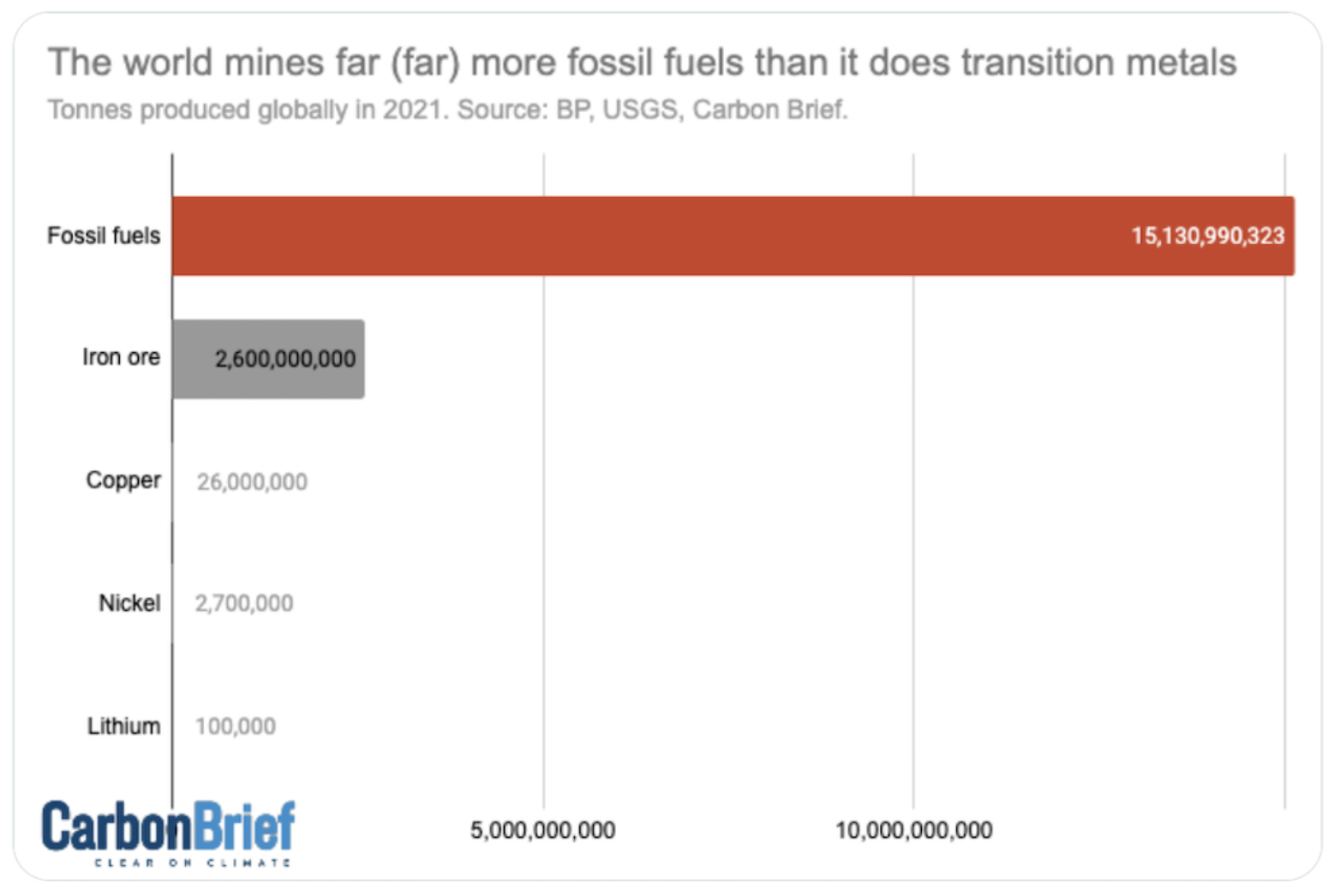


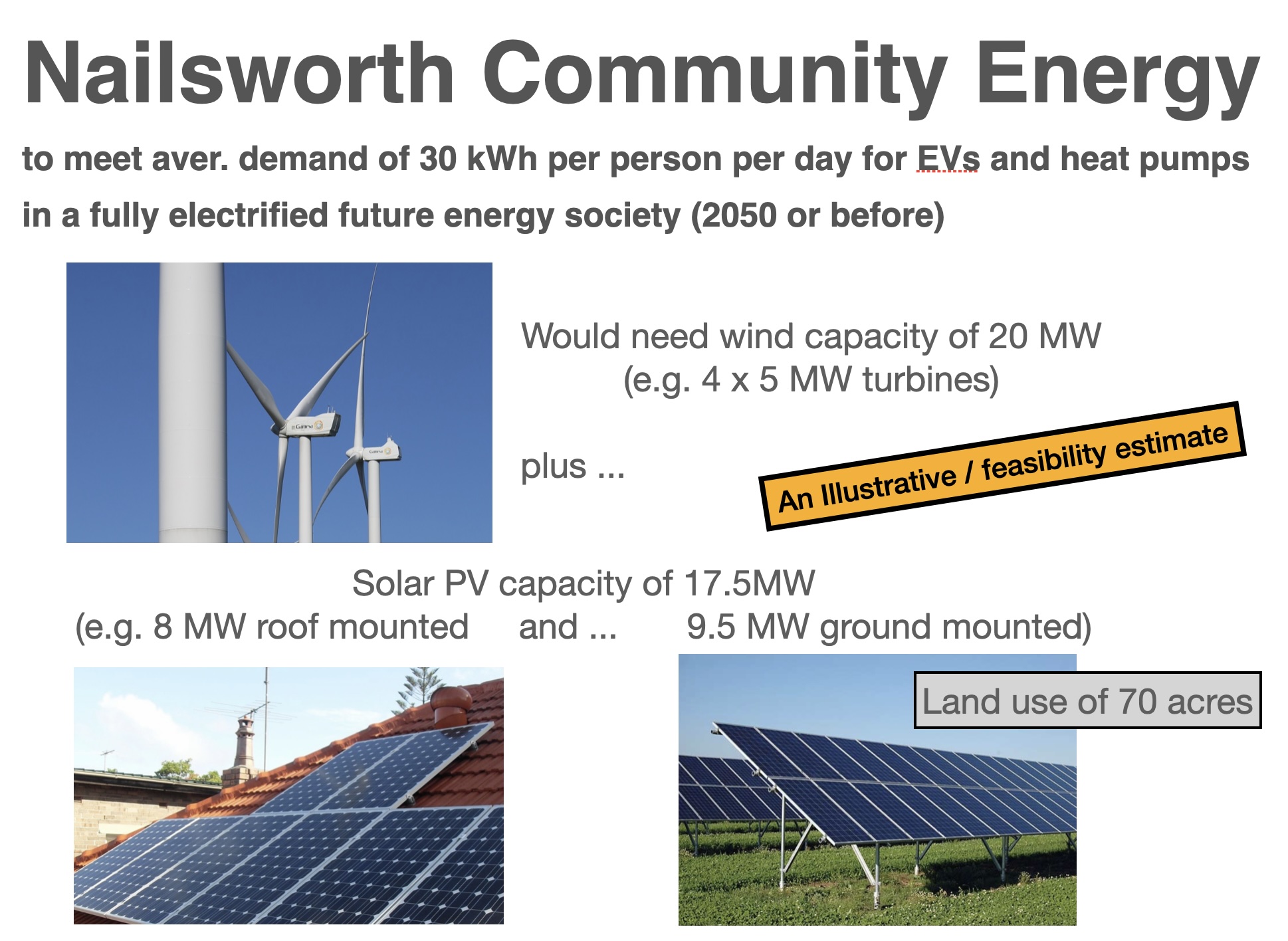

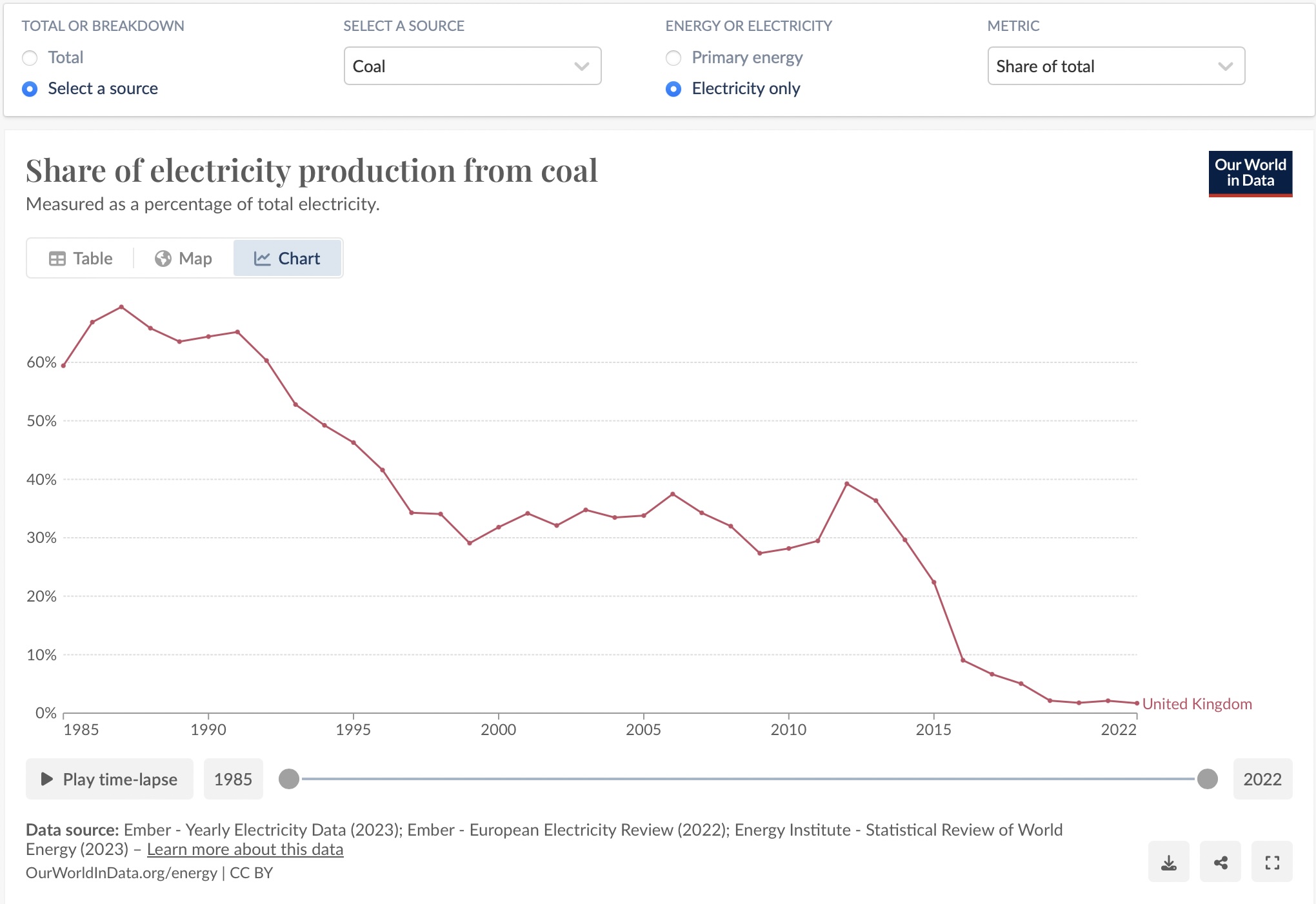

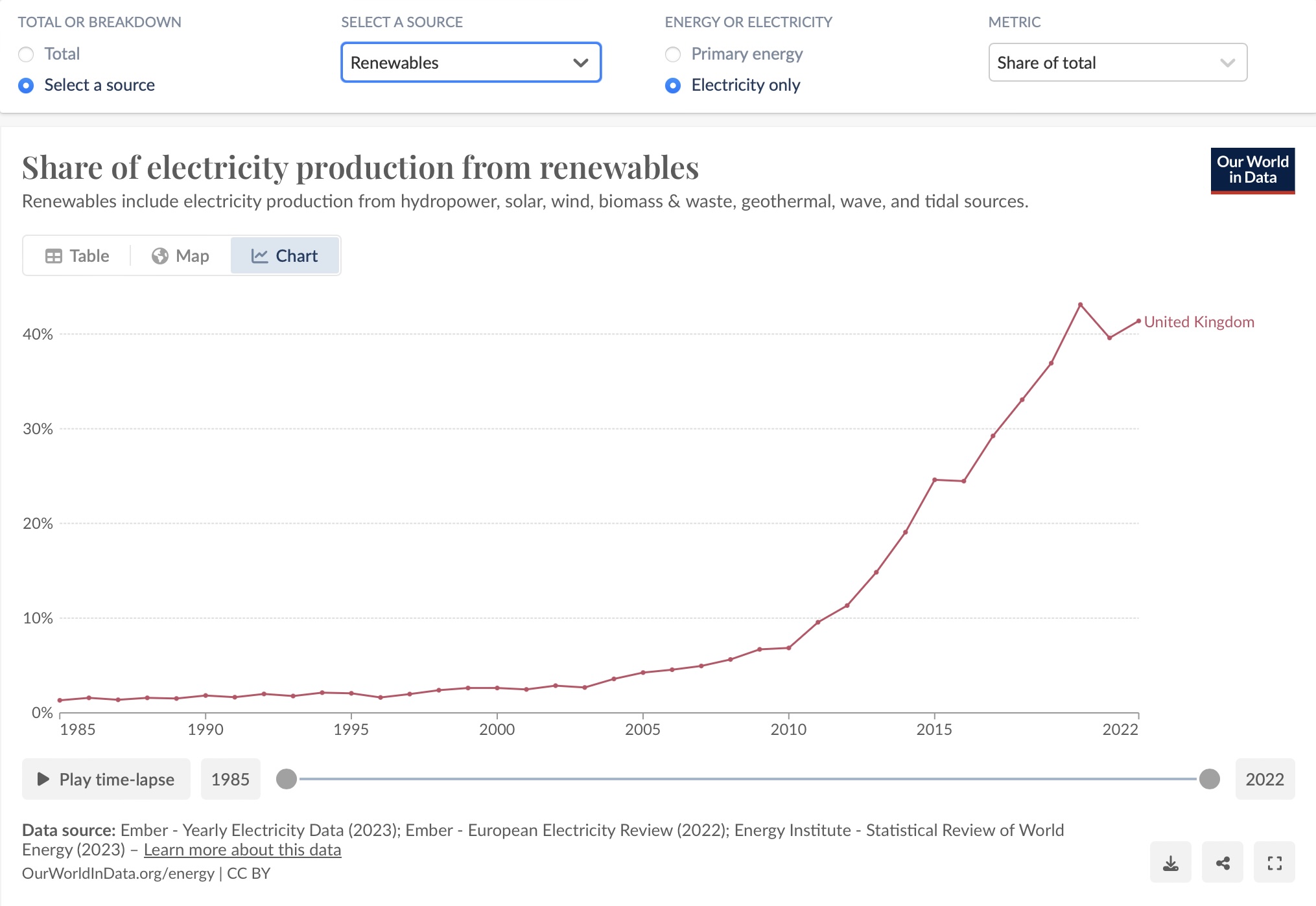

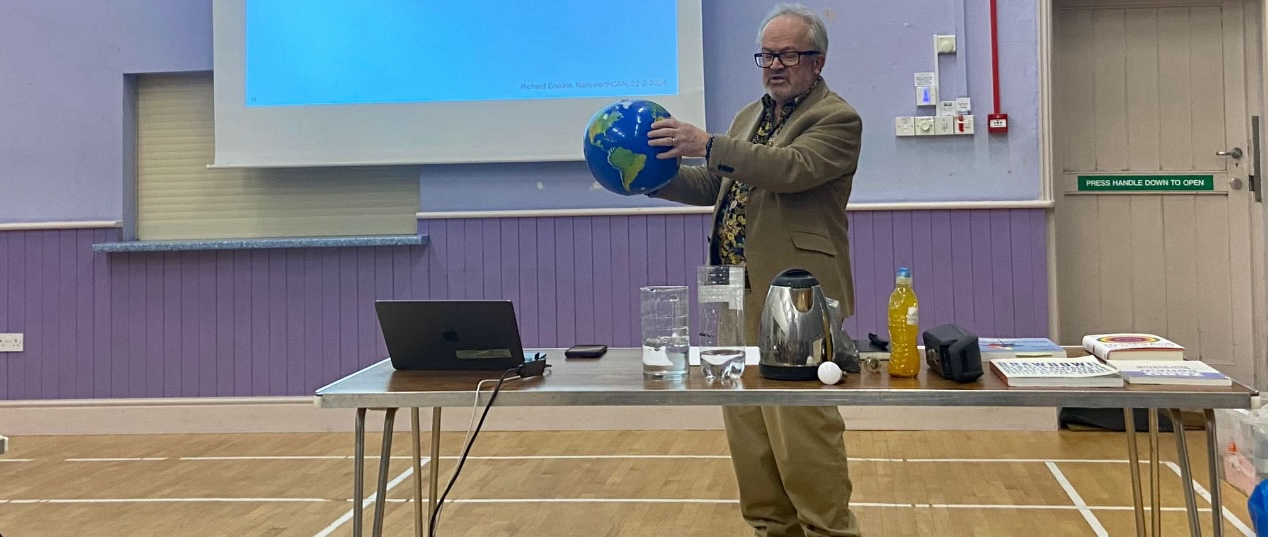
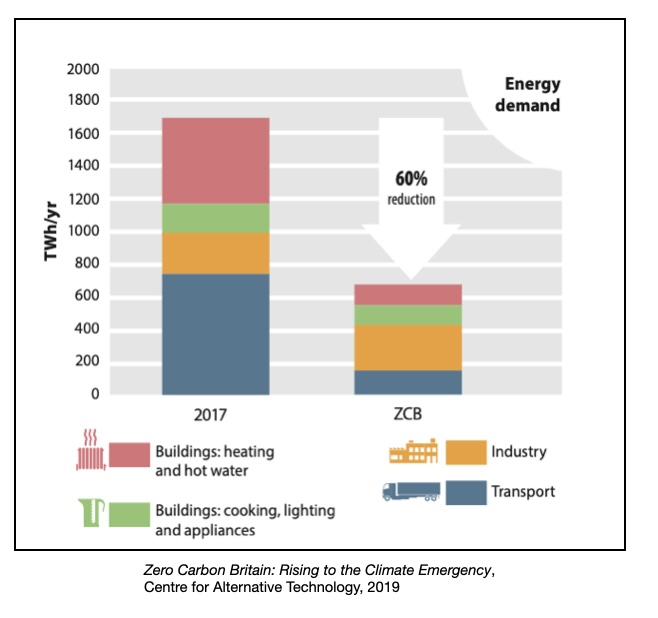
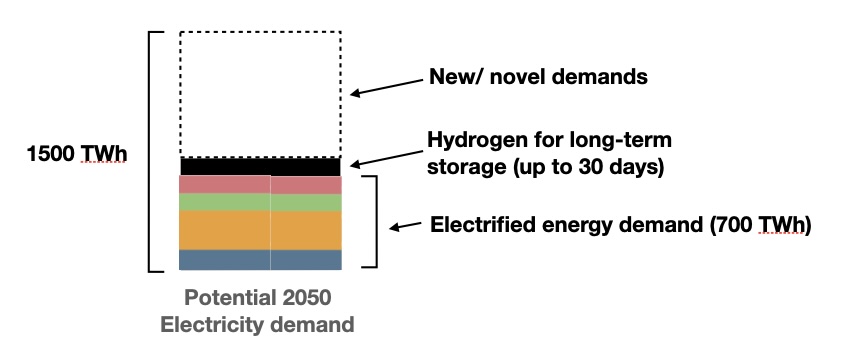


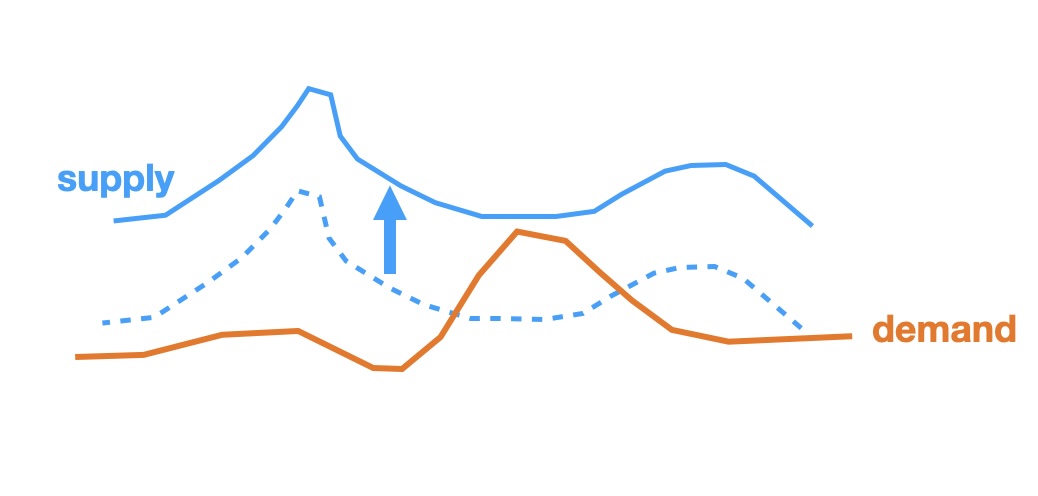
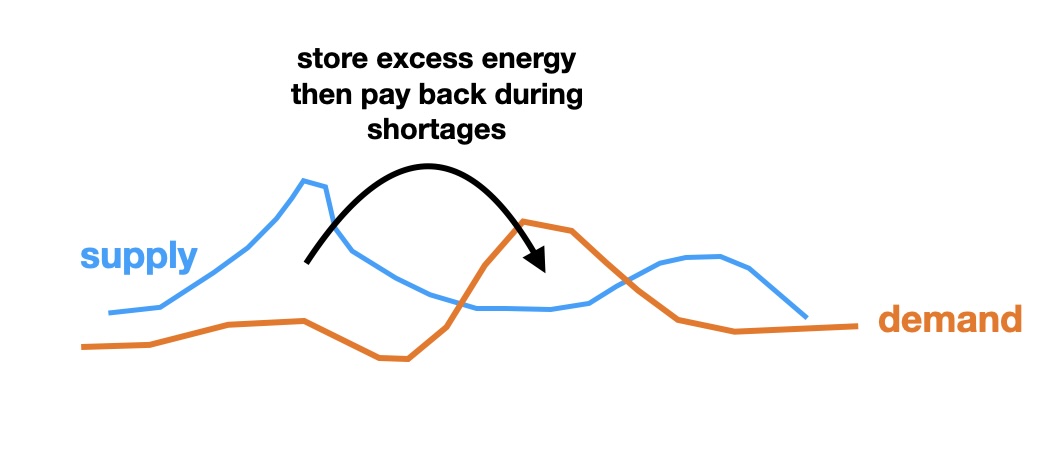
 EssaysConcerning